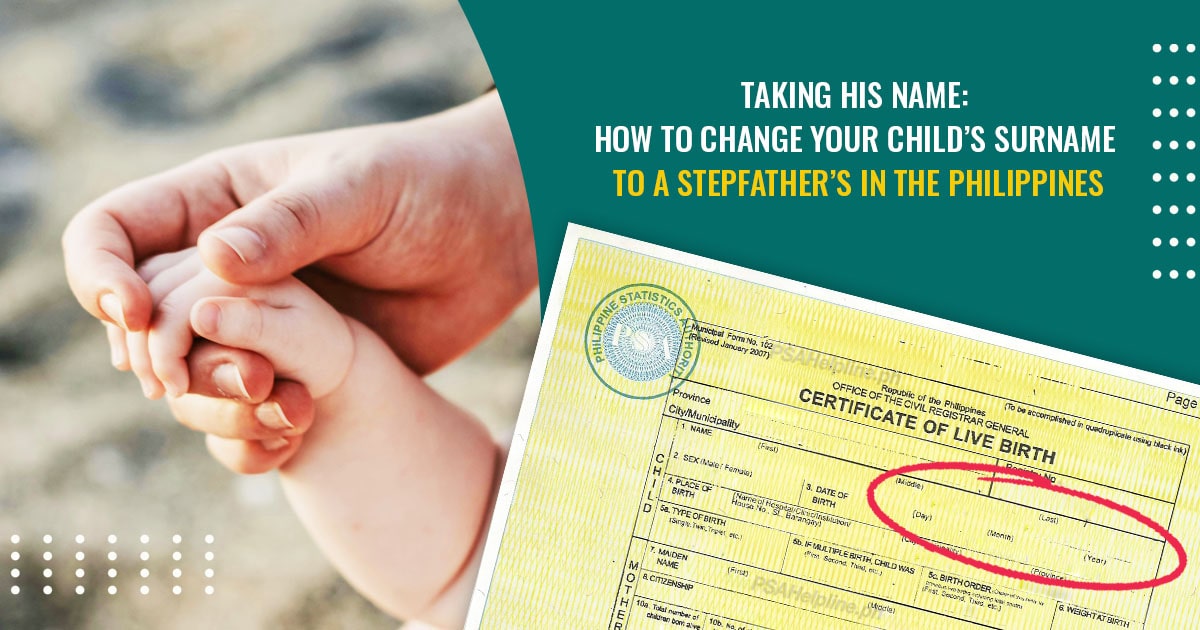
When families grow and change, so do the names that represent them. Many Filipino stepfathers lovingly take on the role of a real dad: helping with school projects, attending family events, and providing everyday care. Naturally, some parents want their child’s surname to reflect that bond, too.
But when you check your child’s PSA birth certificate, you will see that changing a surname is not as simple as updating a form. Philippine laws are strict about how names are recorded, and the child’s surname follows their legal father, not their mother’s new marriage. If you want a PSA record that officially carries your husband’s name, you will need to follow one of two legal routes, each ending with an updated certificate you can later request via PSA online or through birth certificate delivery.
Why Changing a Child’s Surname Is Not Simple
Let us take the story of Abby and her son Josh. Josh’s biological father is Arvin Santos, but his stepfather, Eric Fajardo, has raised him since he was little. At school and in their neighborhood, everyone knows him as Josh Fajardo, but his PSA birth certificate still says Josh Santos.
When Abby married Eric, she hoped the name change could be automatic. But the law says otherwise.
Here is the plain truth:
- Marriage does not automatically change a child’s surname. The child’s legal name stays tied to their biological father unless adoption or a court-approved name change takes place.
- Clerical error laws will not help. Republic Act No. 9048 (Clerical Error Law) and Republic Act No. 10172 allow fixing simple errors or changing first names, birthdays, or gender entries but they do not permit changing a child’s surname just because of a parent’s remarriage.
That means parents must go through one of two formal processes to make the stepfather’s surname official.
Path 1: Step-Parent Adoption Making It Official in Every Way
If your goal is to make the bond fully legal and not just change the name, adoption is the best path.
What Adoption Means
Adoption legally recognizes the stepfather as the child’s father. Once approved, the child gains the same rights as a biological child, including inheritance rights and the legal right to use the stepfather’s surname.
The PSA birth certificate will be officially amended and not just annotated to show the stepfather as the legal father.
How it works today
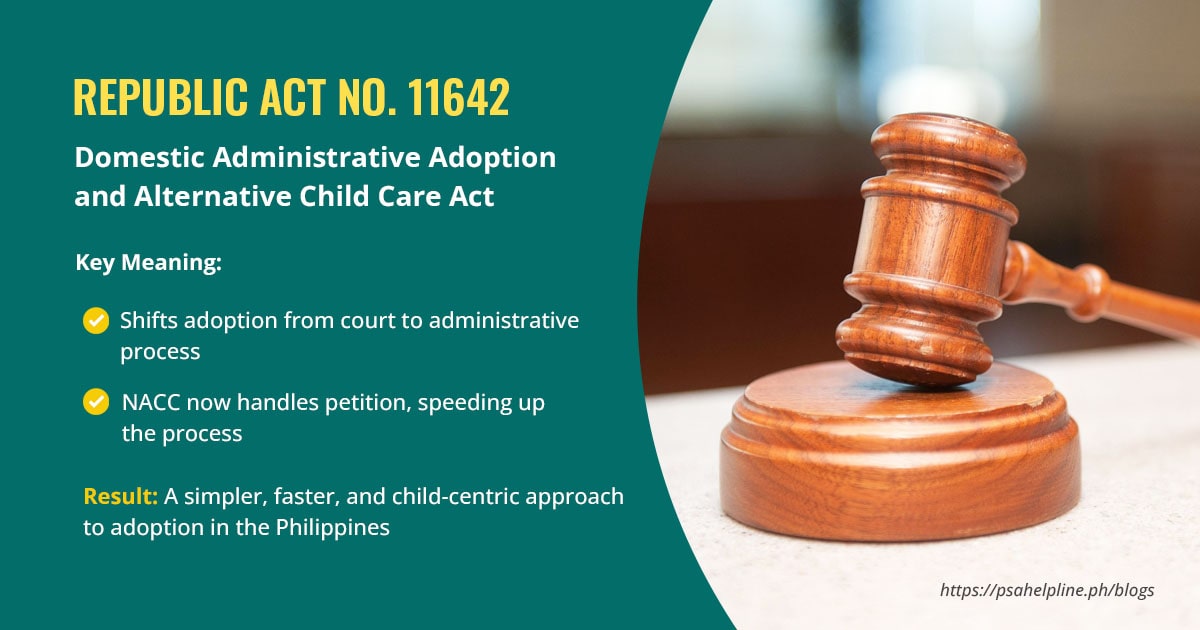
Thanks to Republic Act No. 11642 or the Domestic Administrative Adoption and Alternative Child Care Act, adoption is now handled by the National Authority for Child Care (NACC). This means you no longer need to go through a long court process.
The NACC and its regional offices (RACCOs) handle applications and, when approved, issue an Order of Adoption. That order is then registered with the local civil registrar, which leads to a new PSA-issued birth certificate.
Who needs to give consent
- The child (if 10 years old and above)
- The biological mother
- The biological father, unless there is proof of abandonment or a court order removing his parental rights
Once completed, you can get the first updated copy of the PSA certificate at a PSA CRS outlet. All succeeding copies afterwards may be requested online through PSAHelpline.ph for convenient PSA delivery straight to your home.
Path 2: Judicial Change of Name When Adoption Is Not Possible
If adoption cannot move forward right away and if proving abandonment by the biological father is difficult, you can instead file a petition in court to change the surname.
What it involves
This process follows Rule 103 of the Rules of Court. You will need to file a petition with the Regional Trial Court (RTC) to request the change of surname.
It is important to understand that this does not create a legal father-child relationship between the child and the stepfather. It only changes the surname on record.
When courts usually approve
Judges generally agree with a name change if it clearly benefits the child:
- The child has long used the stepfather’s surname in school or daily life and changing it would avoid confusion.
- The biological father has abandoned the child and is no longer involved.
- The child is old enough to express a sincere wish to use the stepfather’s surname.
However, if the biological father still maintains contact or objects to the change, the petition becomes much harder to win.
If the court grants the petition, the decision is recorded on the child’s existing PSA birth certificate as an annotation, changing the surname, but not the listed father.
Beyond Paperwork: It Is About Belonging
Changing a child’s surname to match their stepfather’s is never just about forms or paperwork. It is about family identity.
Through either adoption or a judicial name change, you can make that family bond legally visible. Once the process is complete, you can easily request the updated PSA birth certificate online and have it sent safely through birth certificate delivery to your chosen address.
While it takes patience and paperwork, these legal steps protect your child’s identity and ensure that the name they carry proudly reflects the love and stability they have at home.