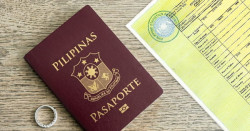
Foreign nationals who wish to get married in the Philippines must first secure a Legal Capacity to Contract Marriage (LCCM) from their embassy or consulate. This document certifies that the person is legally free to marry under the laws of their home country—meaning they are of legal age, single, widowed, or lawfully divorced.
Under the Philippine Family Code, a marriage license will not be issued if one of the parties is a foreign citizen without an LCCM. It serves as proof that the foreigner meets their country’s marriage requirements, while the marriage license ensures compliance with Philippine law. In short: no LCCM, no marriage license.
Table of Contents
- Why the LCCM Matters
- Who Needs to Secure an LCCM
- What Information an LCCM Usually Contains
- Supporting Documents to Prepare
- When the Embassy Does Not Issue an LCCM
- How the LCCM Fits into the Marriage License Process
- Civil vs. Church Weddings
- Common Problems and How to Avoid Them
- Step-by-Step Guide for Foreigners
- Special Situations
- Key Takeaways
- Disclaimer
Why the LCCM Matters
Every country has its own rules on who can legally marry. In the Philippines, when a foreigner is one of the marrying parties, the LCRO must confirm their eligibility through the LCCM. This ensures that both local and foreign laws are observed.
The LCCM protects both parties by confirming that:
- The foreign national is free to marry under their country’s law.
- Any previous marriage has been legally terminated.
- The person meets the age and legal qualifications required to marry.
Even if a foreigner meets all conditions in their home country, their marriage in the Philippines must still comply with local requirements—such as obtaining a valid marriage license, attending pre-marriage counseling, and ensuring the ceremony is conducted by an authorized solemnizing officer.
Who Needs to Secure an LCCM
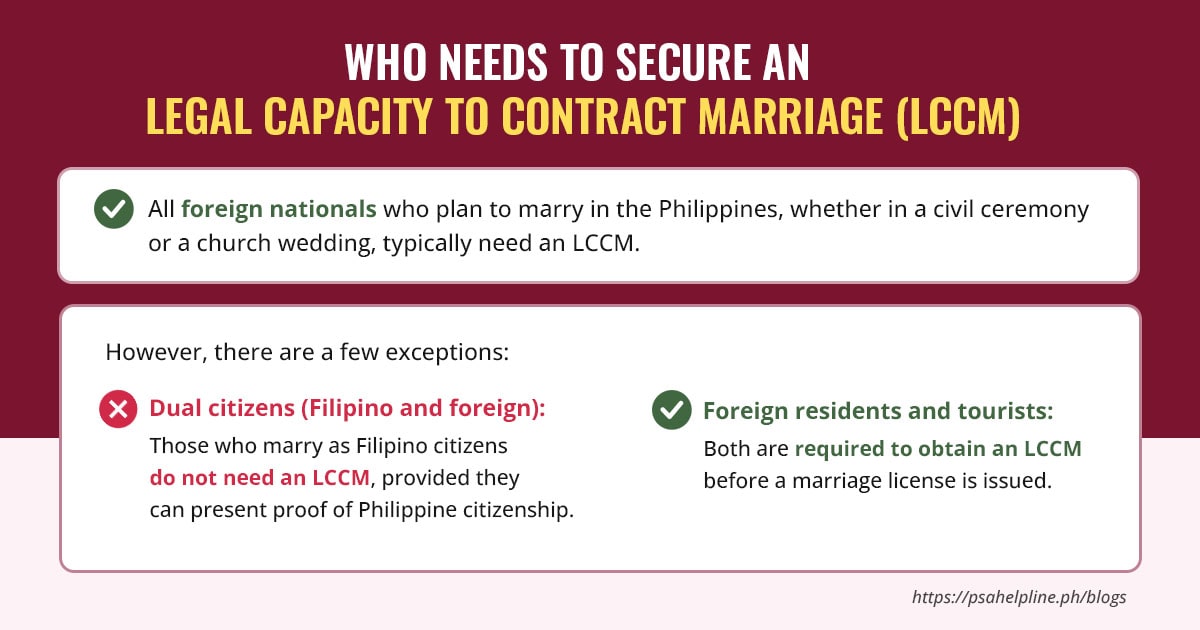
All foreign nationals who plan to marry in the Philippines, whether in a civil ceremony or a church wedding, typically need an LCCM.
However, there are a few exceptions:
- Dual citizens (Filipino and foreign): Those who marry as Filipino citizens do not need an LCCM, provided they can present proof of Philippine citizenship.
- Foreign residents and tourists: Both are required to obtain an LCCM before a marriage license is issued.
If you are unsure about your specific situation, contact your embassy or the LCRO where you plan to apply.
What Information an LCCM Usually Contains
An LCCM generally includes the following details:
- Full name, sex, date, and place of birth
- Current civil status (single, widowed, divorced)
- Statement confirming capacity to marry under national law
- Passport number and place of residence
- Consular officer’s signature and seal
Some embassies issue a “certificate of no impediment” or an “affidavit in lieu of LCCM.” These serve the same purpose.
Supporting Documents to Prepare
When applying for a marriage license, foreign nationals should be ready with both original and photocopied documents. Non-English or non-Filipino records must be officially translated and authenticated.
Common requirements include:
- Passport and proof of lawful stay in the Philippines
- LCCM or equivalent document issued by the embassy or consulate
-
Proof of civil status:
- Single: Some LCROs accept the LCCM alone, while others require a “single status” certificate.
- Divorced: Final divorce decree, apostilled and translated if necessary.
- Widowed: Spouse’s death certificate, also apostilled or consularized.
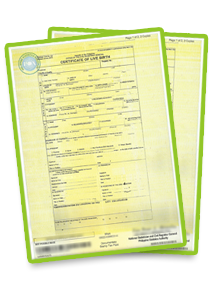
- For the Filipino partner: A PSA birth certificate, CENOMAR, or annotated PSA marriage certificate, plus valid government-issued IDs.
To save time, Filipino partners may conveniently order their PSA documents through PSAHelpline.ph for fast and secure PSA delivery.
When the Embassy Does Not Issue an LCCM
Some embassies no longer issue LCCMs. In such cases, the foreign applicant may provide:
- An affidavit in lieu of LCCM, executed before the embassy or a Philippine notary, declaring that they are legally free to marry.
- Additional evidence, such as a civil registry record or “certificate of no record of marriage,” duly apostilled or consularized.
LCROs may have different rules for accepting these substitutes, so it’s best to check with the specific office where you’ll apply. Bring extra supporting documents to avoid delays or rejection.
How the LCCM Fits into the Marriage License Process
The LCCM is part of the marriage license application process, which typically involves:
- Visiting the LCRO of the city or municipality where either party resides
- Submitting the LCCM and other documentary requirements
- Attending pre-marriage counseling or family planning seminars
- Waiting for the mandatory 10-day posting period
- Claiming the marriage license (valid for 120 days nationwide)
Once the license is issued, you can proceed with your civil or church wedding. The officiant will then register the marriage, and your record will later be available as a PSA certificate online or through PSA delivery.
Civil vs. Church Weddings
Whether you choose a civil or religious ceremony, a valid marriage license is still required (unless a specific exemption applies). Most churches will also ask for the foreigner’s LCCM or affidavit before setting the wedding date.
After the ceremony, the marriage certificate must be registered with the LCRO and transmitted to the Philippine Statistics Authority (PSA) for national record-keeping. Couples can then conveniently request a PSA marriage certificate online once registered.
Common Problems and How to Avoid Them
Here are frequent issues couples face—and how to prevent them:
- Expired documents: LCROs often require documents issued within the last 6 months.
- Unrecognized divorces: Filipino partners must have foreign divorces judicially recognized before remarrying.
- Name discrepancies: Ensure consistent spelling across passports, certificates, and the LCCM.
- Embassy delays: Secure appointments early and confirm processing times.
- Language barriers: Always provide official translations, duly apostilled.
- Age concerns: The minimum marrying age is 18. Those under 21 need parental consent; those aged 21–25 need parental advice.
Step-by-Step Guide for Foreigners
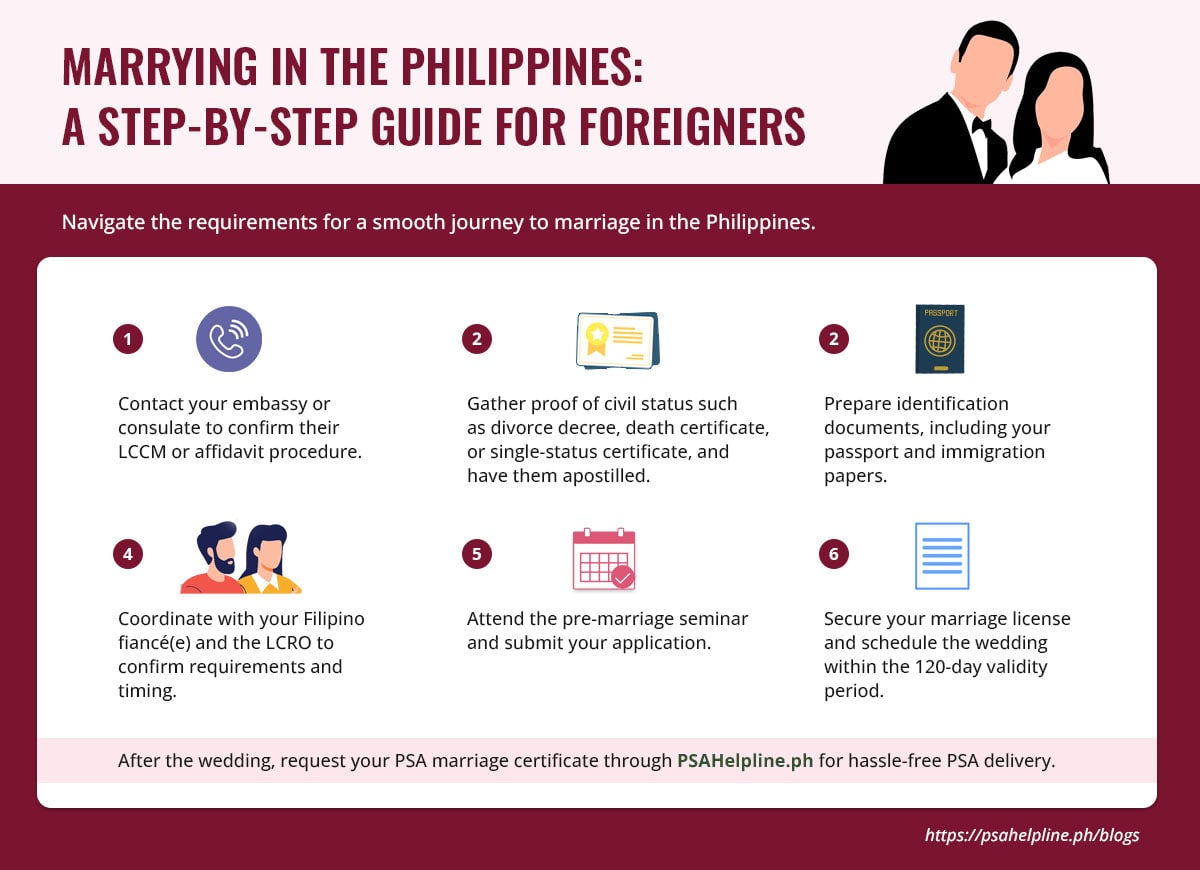
- Contact your embassy or consulate to confirm their LCCM or affidavit procedure.
- Gather proof of civil status such as divorce decree, death certificate, or single-status certificate, and have them apostilled.
- Prepare identification documents, including your passport and immigration papers.
- Coordinate with your Filipino fiancé(e) and the LCRO to confirm requirements and timing.
- Attend the pre-marriage seminar and submit your application.
- Secure your marriage license and schedule the wedding within the 120-day validity period.
- After the wedding, there is a standard transmittal period before your records become available with the PSA. For weddings registered in Metro Manila, this usually takes 2 to 4 months, while weddings held outside Metro Manila may take up to 6 months. Once this period has passed, you may conveniently request your PSA marriage certificate through PSAHelpline.ph for hassle-free PSA delivery.
Special Situations
- When marrying abroad: The host country’s laws determine if you need an LCCM. Afterward, report the marriage to the nearest Philippine embassy or consulate for PSA registration.
- Muslim or indigenous customary marriages: These follow distinct rules but still require LCRO registration for PSA records.
- Same-sex marriages: Currently not recognized under Philippine law.
Key Takeaways
The Legal Capacity to Contract Marriage (LCCM) confirms that a foreign national is legally free to marry in the Philippines. It’s an essential step before obtaining a marriage license, whether you’re planning a church or civil wedding.
Prepare your documents early, check with both your embassy and the Local Civil Registry Office, and ensure your records are properly authenticated. Once your marriage is registered, you can easily request PSA-certified copies—like your marriage certificate or PSA birth certificate—through PSAHelpline.ph for quick and secure PSA delivery.
Disclaimer: This article is for educational purposes only and should not be treated as legal advice. Always verify specific requirements with your embassy, consulate, or the Local Civil Registry Office where you plan to marry.