For decades, the iconic “Red Ribbon” was a rite of passage for Filipinos heading abroad. It meant navigating heavy traffic to a DFA office, waiting in long lines, and spending days just to get a physical seal on your documents. Those days are officially over.
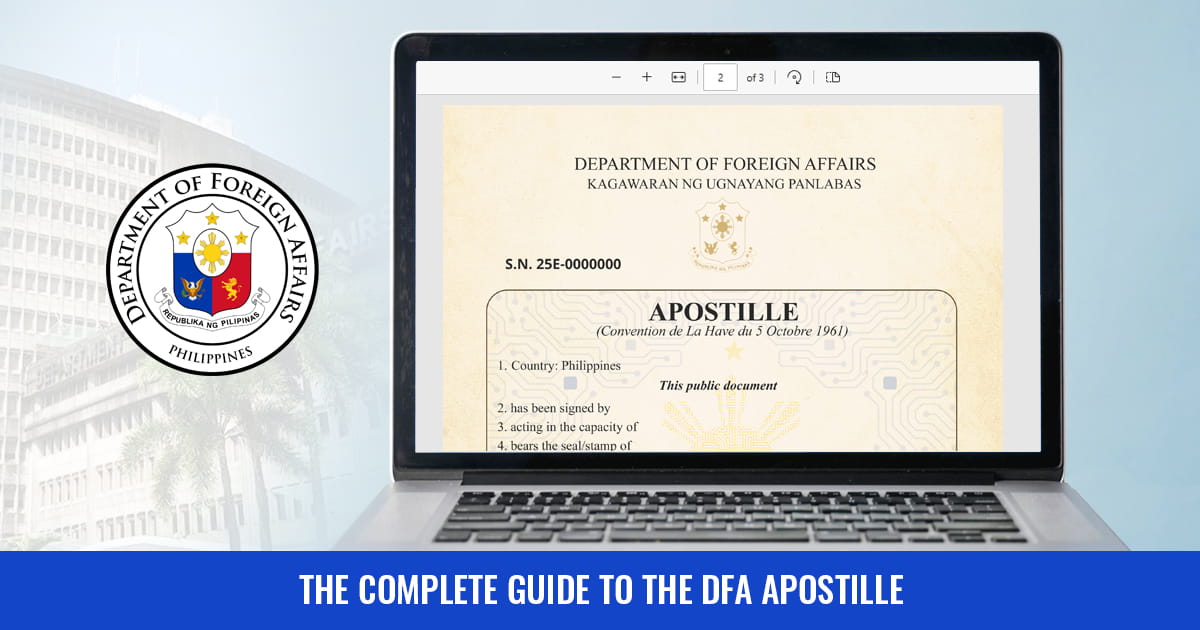
On March 16, 2026, the Department of Foreign Affairs (DFA) launched the Fully Digital Apostille (eApostille), making the Philippines the first country in ASEAN to fully implement the HCCH Electronic Apostille Programme (eAPP). Whether a student, an OFW, or a family relocating overseas, this system is designed to save time, enhance security, and simplify the document authentication process.
What Is the eApostille?
The eApostille is a digitally signed certificate with the same legal weight as a traditional paper apostille. It is an internationally recognized digital document featuring:
- Advanced cryptographic security to prevent tampering
- QR-based verification for instant authentication
Important: The eApostille Is “Digital First”
- Do Not Print: Once printed, the eApostille becomes invalid.
- Send Digitally: Forward the file directly to foreign universities, employers, or embassies via email.
Why the eApostille Matters
The launch of the eApostille is not just a technical upgrade; it transforms how Filipinos interact with government services:
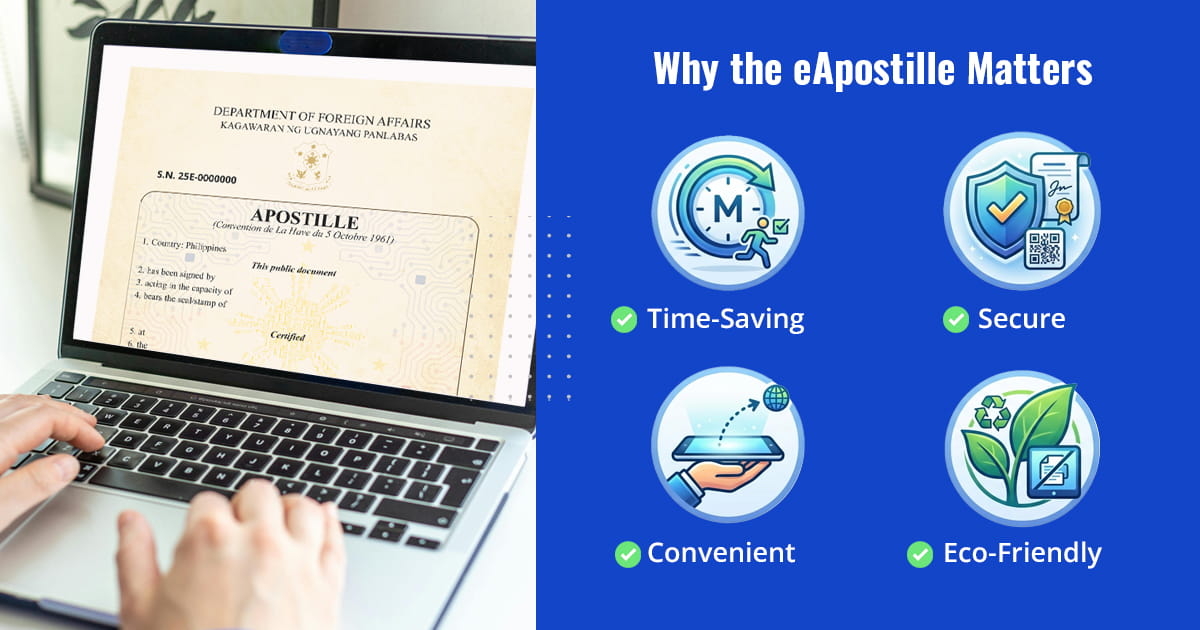
- Time-Saving: Complete authentication in minutes, no queues or long travel.
- Secure: Digitally signed, tamper-proof, and verified with QR codes.
- Convenient: Send directly to international recipients.
- Eco-Friendly: Fully digital, no printing or physical delivery needed.
Which Documents Are Eligible?
The eApostille system currently supports the most requested types of public records:
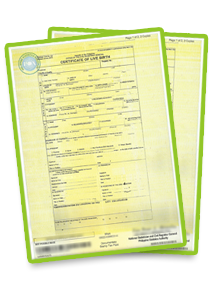
- PSA E-Certificates: Birth, Marriage, and Death Certificates, including CENOMAR.
-
CHED eCAVs: Digital academic records (diplomas and transcripts) from the Commission on Higher Education.
If the PSA document has faded entries, the applicant may upload an LCR copy during the application process to avoid delays.
Step-by-Step Guide to Getting Your eApostille
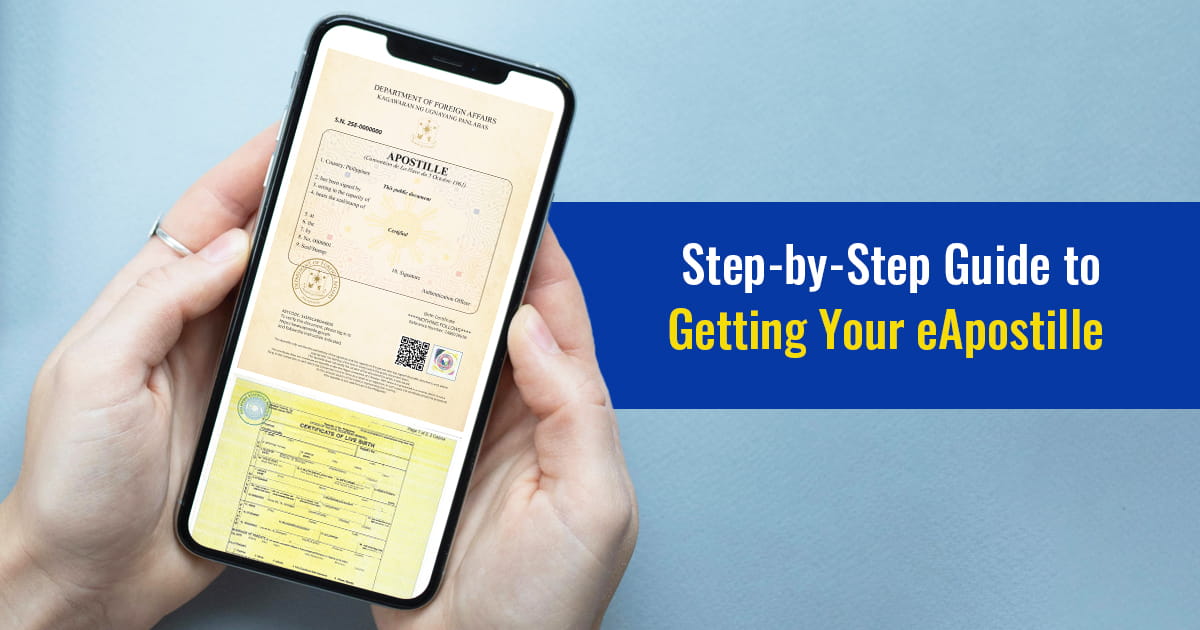
The entire application process takes less than 10 minutes. Here’s how to secure one via PSAHelpline.ph:
- Visit PSAHelpline.ph and click “Order Now.” Select the certificate type (e.g., Birth Certificate). For Delivery Option, choose “Direct to DFA Apostille.”
-
The applicant will be redirected to the DFA portal to select the destination country.
- eApostille Route: If the country is a member of the Apostille Convention (e.g., USA, UK, Japan), the applicant will receive a digital eApostille and e-certificate via email.
- Paper Route: For non-member countries (e.g. UAE, Qatar), the system automatically issues a Certificate of Authentication delivered to your address.
The Apostille Convention, formally the Hague Convention Abolishing the Requirement of Legalisation for Foreign Public Documents, allows documents issued in member countries to be recognized abroad without embassy legalization.
-
The applicant can only request documents for themselves, with two exceptions:
- A parent requesting for a minor child’s birth certificate
- Requests for a death certificate
-
The DFA now requires Liveness Check and Identity Verification:
- ID Upload: Submit a valid government ID.
- Liveness Instruction: Follow prompts (e.g., nod or smile) to confirm you are a real person.
- Manual Fallback: If automated IDV fails three times, you can still proceed; DFA will manually review your submission. Take note that the order must be paid in full before the manual review can begin.
-
Below is the breakdown of fees for both eApostille and Paper Apostille:
eApostille:
Certificate Type Certificate Fee Apostille Fee Total Birth, Marriage, and Death Certificates Php 300 Php 200 Php 500 "CENOMAR/CENODEATH" Php 360 Php 200 Php 560 Paper Apostille:
Certificate Type Certificate Fee Apostille Fee Delivery Fee Total Birth, Marriage, and Death Certificates Php 300 Php 200 Php 250 Php 750 "CENOMAR/CENODEATH" Php 360 Php 200 Php 250 Php 810
Guidelines for a Smooth Process
- Check the Recipient: Confirm that the foreign end-user accepts digital files before choosing eApostille.
- No OTP Required: The eApostille process does not require OTPs, streamlining submission for users abroad.
- Non-Member Countries: For destinations outside the Apostille Convention, traditional legalization via the country’s embassy is still required.
- LCR Upload: If the PSA document has faded or unreadable entries, include an LCR copy to prevent delays.
A “Digital First” Future
The eApostille is part of a whole-of-government initiative to make public service faster, more transparent, and highly efficient. PSA and CHED are the pioneers, but more agencies are expected to join the eApostille system later this year, enabling broader digital document authentication across government services.
Conclusion
The Fully Digital Apostille is more than a technical upgrade; it is a revolution in public service. Students can send their diplomas instantly to foreign universities. OFWs can submit critical documents without leaving home. Families relocating abroad can complete all requirements seamlessly.
By embracing the eApostille, the Philippines sets a new standard for digital government services in ASEAN, making document authentication faster, safer, and smarter. Say goodbye to long queues and printed red ribbons; official papers can now travel with the user, digitally secured and globally recognized.
Start an eApostille application today at PSAHelpline.ph and experience the future of document authentication.