One of the most persistent ironies of adulthood in the Philippines is the classic dilemma: you need a valid ID just to prove who you are and get another valid ID. For generations, this cycle has delayed banking, school enrollments, and government transactions for young Filipinos.
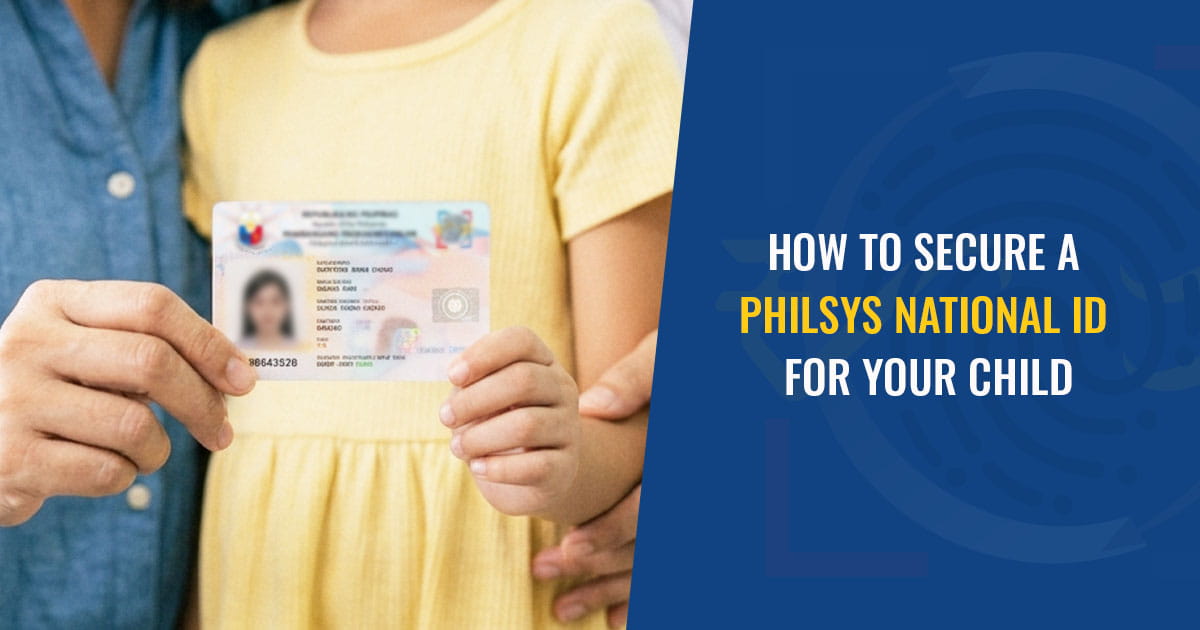
To break this cycle for the next generation, the Philippine Statistics Authority (PSA) has expanded its Philippine Identification System (PhilSys) registration. Now, children aged zero to four can be registered for their National ID. This ensures your child enters the official national database with a permanent, government-issued credential that is free and valid for life, requiring zero failure renewals or re-registrations.
If you want to secure this lifelong advantage for your child early on, here is a complete, rewritten breakdown of how the process works, what you need to prepare, and the vital role your child’s records play.
Table of Contents
How the Under-5 Registration Process Works
1. The Parental Link
A child’s National ID cannot exist in a vacuum. Because the minor is under five years old, their PhilSys Number must be digitally linked to a responsible adult. Therefore, the accompanying parent or legal guardian must already be registered with PhilSys and possess a valid PhilSys Card Number (PCN) before the child can be enrolled.
2. Deferred Biometrics
For children aged 0 to 4, the PSA completely waives the complex biometrics requirements. Personnel will not scan the child’s iris or capture their fingerprints at the registration center. Instead, the process is limited to:
- Capturing a standard, front-facing photograph of the child.
- Collecting basic demographic data (sex, date of birth, place of birth, blood type, address, nationality, and a parent’s mobile number).
Note on Future Updates: Once the child grows older and passes the age of five, you will simply bring them back to a PhilSys center to capture their permanent fingerprints and iris scans.
The Ultimate Document Checklist
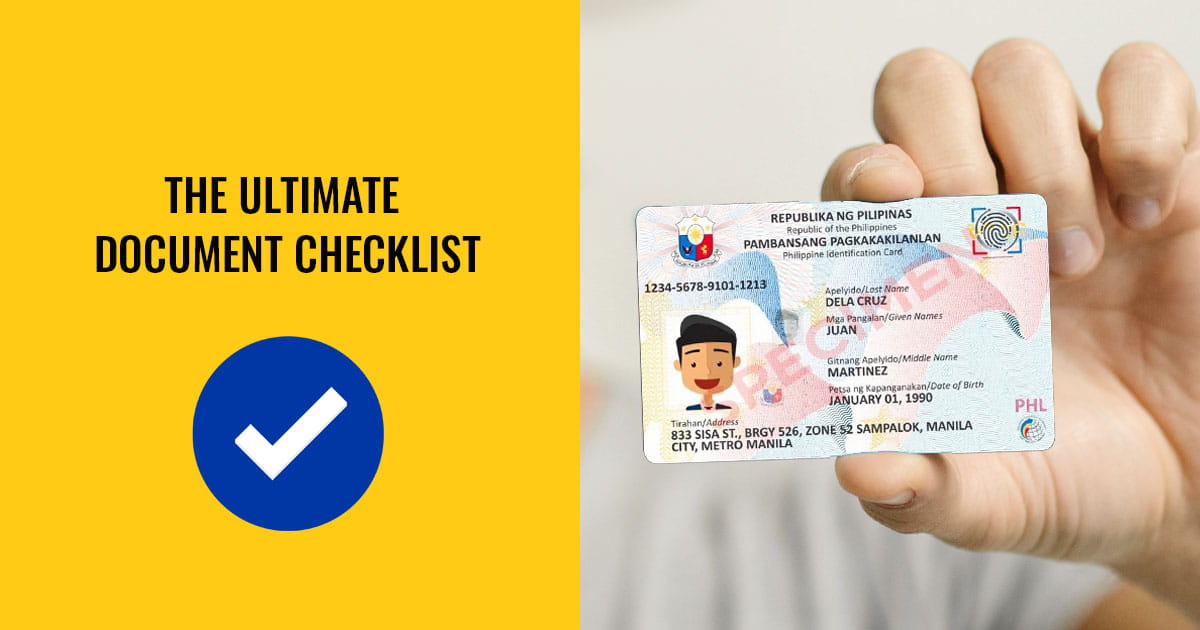
The actual registration at an active PhilSys center is straightforward, but it hinges entirely on establishing the child’s legal identity and relationship to you.
The Essential Baseline: The PSA Birth Certificate
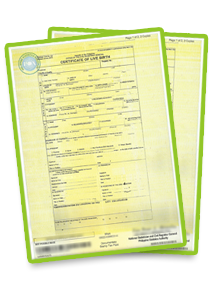
The single most critical document for this entire process is the child’s official birth certificate. It serves as both the proof of identity for the child and the legal proof of filiation (showing that you are the actual parent).
If you do not have an official, security-paper copy of your child’s birth certificate on hand, you do not need to endure long queues at a government office to get one. You can easily order a PSA birth certificate through PSA online services. Utilizing platforms like PSAHelpline.ph allows you to handle the application entirely from your smartphone or computer. Once processed, you can conveniently wait for your secure birth certificate delivery right at your doorstep, ensuring you have the pristine paperwork ready before heading to the PhilSys center.
Full Documentation Breakdown:
1. Child’s PSA Birth Certificate
2. Valid PhilSys Card Number (PCN) of the parent/guardian
3. Accompanying adult’s valid government-issued ID
4. For special cases (absent or underage parents):
- Express Authorization Letter signed by the parent
- Clear photocopy of the parent’s valid ID
- Official guardianship documents (if applicable)
Why Early Registration Matters
Enrolling an infant or toddler into the PhilSys network is about bulletproofing their administrative future. By securing their card early, you open doors to seamless, single-ID verification for the rest of their youth:
- Academic Milestones: Streamlines kindergarten and elementary school enrollments without requiring repetitive document submissions.
- Financial Foundations: Allows parents to open trust funds, insurance policies, or specialized savings accounts under the child’s name with minimal friction.
- Government Support: Simplifies access to healthcare benefits, travel documentation, and local social welfare services.
Best of all, this entire initiative, from the initial data capture at the local registration center to the final physical birth certificate delivery and national ID distribution, is completely free of charge for all Filipino citizens. By taking a few moments to organize your paperwork today, you save your child from a lifetime of bureaucratic hurdles tomorrow.